🎯 Get an integrated system of middlegame planning from GM Igor Smirnov’s chess course “Your Winning Plan” – target=”_blank” rel=”nofollow”>http://bit.ly/2RebGBs
📥 Download the PGN of the games shown from this blog-post – http://bit.ly/2Y7Npys
One of the most interesting and unexplored topics in chess is the long-term and short-term advantages.
▬▬▬▬▬▬▬▬▬▬▬▬▬▬▬
What are Short-term Advantages?
Short-term advantages are those that you can exploit quickly in a game – like a quick attack, getting initiative, having more development that the opponent in the opening stage. These advantages don’t last for a long time because your opponent would have chances to equalize them. For instance, your opponent can also develop his pieces in the opening stage and then it will be equal.
▬▬▬▬▬▬▬▬▬▬▬▬▬▬▬
What are Long-term Advantages?
As the name says, long-term advantages help you in the long run. The simplest example for a long-term advantage would be the material advantage, i.e. when you have an extra pawn or a piece than your opponent. Other examples could be having a bishop pair against a bishop and a knight in an open position, and even having a better pawn structure than your opponent. These are something that cannot be compensated easily.
When you have a short-term advantage, you usually will have to make use of it quickly, otherwise it will be gone. Unless you exploit it quickly, a short-term advantage has no value.
Also, these usually come into play when there is a material imbalance. For instance, when a player has sacrificed a pawn to get some initiative, the one with the initiative has a short-term advantage, whereas the player who is a pawn up has the material advantage, which is long-term.
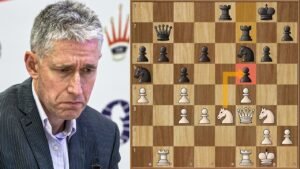
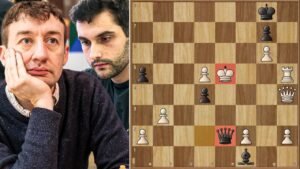
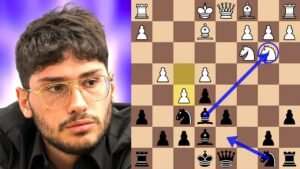
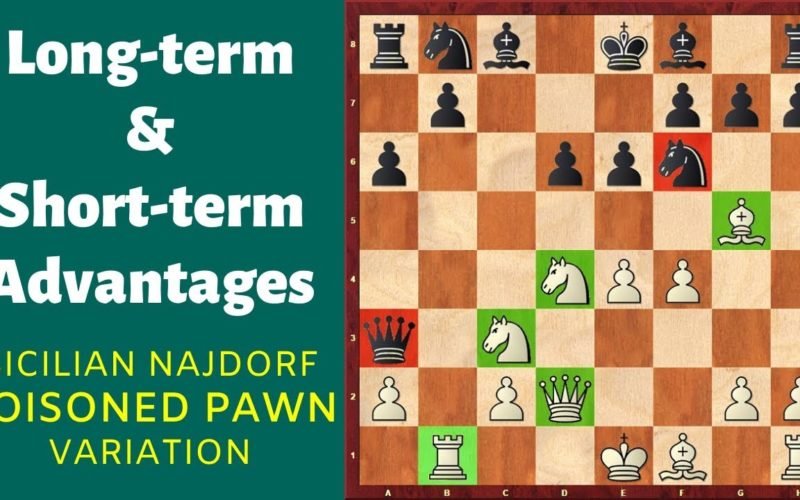
One great example to demonstrate this is the Poisoned Pawn variation from the Sicilian Defense Najdorf. In this video, Manuel Ocantos will present to you a few examples and analyses all of them with the perspective of long-term vs the short-term advantages. He will show you games of Mikhail Tal, Garry Kasparov, Nigel Short, Veselin Topalov, and Levon Aronian.
♕ How to succeed in chess? (FREE e-book): http://bit.ly/2Zlp0FI
♕ How to analyze your games (FREE course): http://bit.ly/2Djz1tB
♕ 7 Best Chess Opening Traps (FREE course): https://goo.gl/GCCK4d
♕ Quick Success in Chess (FREE course): https://goo.gl/45Anbi
♕ Chess Training Plan for Rapid Improvement (FREE course): https://goo.gl/P68HZ6
♕ Chess Opening Fundamentals (FREE e-book): https://goo.gl/dj98ef
♕ Chess Courses and videos: https://goo.gl/WCPMGp