
What it teaches
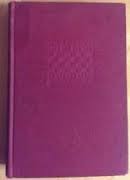
Emanuel Lasker held the world title from 1894 to 1921, longer than anyone before or since, and he was also a mathematician and philosopher. His Manual of Chess reflects all of that. It covers the rules and elementary endings, combinations, and a thoughtful explanation of Wilhelm Steinitz's positional theory, but it is really a book about how to think: chess as a struggle between two people, where judgment, economy and fighting spirit matter as much as memorized knowledge.
Lasker's style is discursive and sometimes old-fashioned, but his ideas about evaluation and practical play still feel modern.
Who it's for
Thoughtful club players and anyone interested in the history and philosophy of the game, roughly 1300 and up. It is less efficient as a first textbook than Capablanca's or Seirawan's books, but more rewarding as a read.
How to get the most from it
Read it slowly and treat it as a conversation with a great mind rather than a course. The sections on Steinitz's principles are worth rereading alongside modern strategy books to see how the ideas have evolved.
Key takeaways
- Chess is a fight between two people, not a search for perfect moves.
- Steinitz's principles, like accumulating small advantages, still underpin strategy.
- Economy matters: use the fewest resources needed to reach your goal.
- Practical judgment and fighting spirit win games that pure knowledge would not.
Read next
For the other great classical teacher, read Chess Fundamentals by Capablanca, Lasker's successor. For the next revolution in strategic thinking, go to My System.