
👉🏽 Say hello to 1500 ELO 📈
https://chessvibescourses.thinkific.com/courses/from-1000-to-1500
😎 Play Chess Here:
https://www.chess.com/membership?ref_id=5885046
Timestamps
0:00 – Principle 1 If you can’t remember an opening line, try to find a normal fallback move
00:56 – Principle 2 Using the king at the end of the game is GOOD
01:17 – Principle 3 When your bishop is on c4, look for tactics on f7
02:25 – Principle 4 If you blunder, make the best of what you still have left!
03:53 – Principle 5 A developing move that also contains a threat is a good idea
05:01 – Principle 6 When your opponent is cramped, try not to trade pieces.
05:51 – Principle 7 When something is lined up with your piece, be careful for discovered checks
06:37 – Principle 8 When your opponent is thinking, use the time to come up with possible ideas
07:09 – Principle 9 Look for “safe” moves when pre-moving in time pressure
07:52 – Principle 10 When being attacked on the flank, counterattack in the center!
08:40 – Principle 11 A free piece(knight or bishop) is better than an “exchange” (rook for knight/bishop)
09:06 – Principle 12 If your opponent sacrifices too many pawns to attack, try to make a blockade
09:39 – Principle 13 A Caro-Kann TRAP!
10:21 – Principle 14 Fritz Variation TRAP!
12:04 – Principle 15 In bishop endgames, try to put your pawns on the opposite color from your bishop.
13:08 – Principle 16 A trick to avoid being attacked by knights
13:36 – Principle 17 Sometimes “in-between” moves can solve the problem
14:41 – Principle 18 Avoid giving your opponent outposts for their knights
15:43 – Principle 19 A rook on the 2nd rank can act as an attacker or defender!
16:16 – Principle 20 More experienced players can use their “instincts” to play quicker
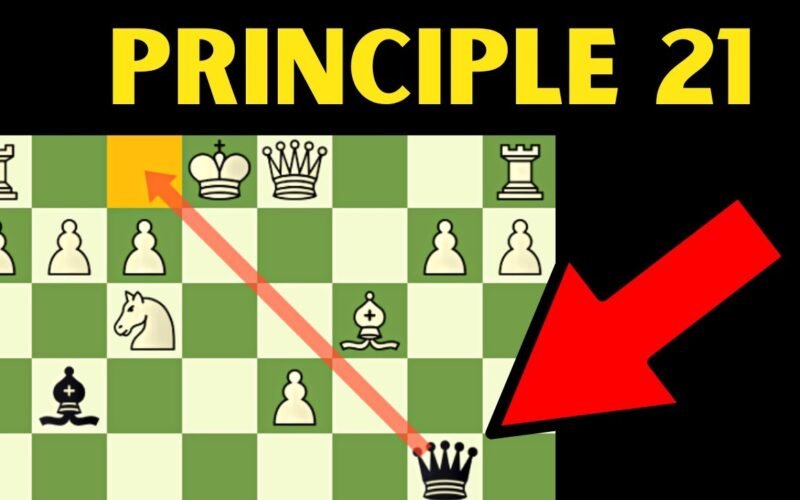
18:26 – Principle 21 Prevent castling when you can!
18:57 – Principle 22 Sometimes the best way to defend a pawn is to move it forward.
19:18 – Principle 23 The order of moves matters!
20:34 – Principle 24 If you can lure the king out, it almost always leads to checkmate
21:51 – Principle 25 Let your opponent develop pieces for you!
22:19 – Principle 26 Pay attention to king placementin relation to passed pawns
22:55 – Principle 27 You can NEVER lose a tempo with just a knight!!
24:48 – Principle 28 It’s important to take your opponent’s out of their comfort zone
25:27 – Principle 29 A tip for the Bb5 Sicilian
26:04 – Principle 30 In closed off positions, knights are generally better than bishops.
👚 Merch: https://Chessvibes.shop
Links are affiliate links and help support the Chess Vibes channel via a commission.